Free Shakespearean Translator – Convert Any Text to Shakespearean English
Language has evolved, but the beauty of Shakespearean English still fascinates readers, writers, and learners today. Our Shakespearean Translator allows you to instantly transform modern text from any language into elegant, old-style Shakespearean English while preserving meaning, tone, and literary depth.
Want to explore the history of Shakespearean English and other great literary languages? Read our guide to the 10 Best Fantasy Languages for Writers and Worldbuilders.
Fantasy Translator
Shakespearean
Translates text into Shakespearean English with archaic terms
What Is a Shakespearean Translator?
A Shakespearean Translator is a stylistic language conversion tool that rewrites modern sentences into Early Modern English inspired by the works of William Shakespeare. This form of English is known for its poetic structure, dramatic rhythm, and expressive vocabulary. Translating into this style is not about replacing words randomly, but about understanding sentence flow, emotional tone, and historical language patterns.
Most tools fail because they treat Shakespearean language as a simple word swap. In reality, Shakespeare’s writing relies heavily on sentence inversion, metaphor, rhythm, and formality. A good translator must restructure the sentence while keeping the original intent intact, which is what this tool is built to do.
How Modern Language Is Transformed into Shakespearean English
Modern English is direct and efficient, while Shakespearean English is expressive and layered. When text is processed through this translator, the meaning is analyzed first. Only then is the sentence reconstructed using period-appropriate grammar, vocabulary, and tone. This approach ensures that the output feels authentic rather than forced.
The difference here is clarity. The translated text remains readable while still carrying that unmistakable Shakespearean elegance. That balance is essential, especially for users who want authenticity without sacrificing understanding.
Examples of Shakespearean Translations
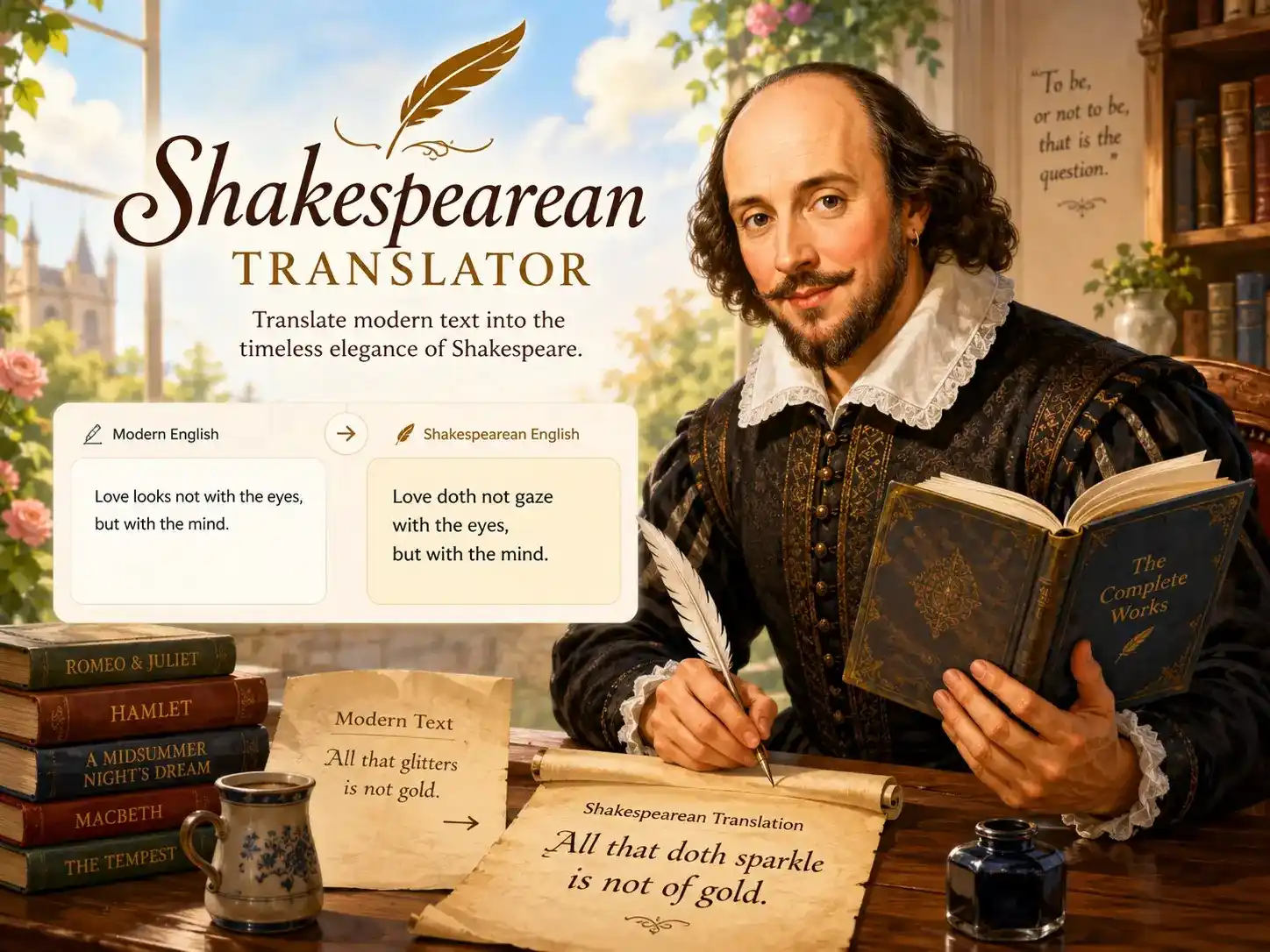
Plain Modern English: “I love you more than words can say.” Shakespearean: “Mine heart doth overflow with love for thee, beyond what tongue can tell.”
Plain Modern English: “Are you ready to fight?” Shakespearean: “Art thou prepared to enter the fray, good sir?”
Plain Modern English: “I don’t understand what you mean.” Shakespearean: “Thy meaning doth escape mine understanding, prithee speak more plainly.”
Plain Modern English: “Good morning, how are you?” Shakespearean: “Good morrow to thee — how dost thou fare on this fine day?”
Plain Modern English: “This is the best day of my life.” Shakespearean: “Verily, no finer day hath graced mine existence upon this earth.”
Notice how the translator preserves meaning while adding the poetic rhythm, archaic pronouns, and dramatic flair that define Shakespearean English.
Translate Any Language into Shakespearean Style
One of the most impressive aspects of this Shakespearean Translator is its ability to handle text from any language. Whether the input is English or another language, the tool interprets the meaning and then renders it into Shakespearean-style English. This makes it particularly useful for international users, students, and multilingual creators.
Instead of limiting creativity to English-only input, the tool opens the door for global expression in a classical literary style. That flexibility is rare and valuable.
Why Shakespearean English Still Matters Today
Shakespearean English continues to be relevant because it adds depth and emotion to language. It forces the reader to slow down and engage with the text. In creative writing, theater, education, and even entertainment content, this style creates a sense of drama and sophistication that modern language often lacks.
Using Shakespearean phrasing immediately elevates the tone of a piece. It adds weight and presence, which is why this style is still widely used in plays, adaptations, literature studies, and creative projects.
Built for Human-Like, Readable Output
One of the biggest problems with Shakespearean translation is readability. Many tools produce text that looks old but feels unnatural. This translator avoids that issue by focusing on linguistic patterns rather than visual gimmicks.
The output flows naturally, making it suitable for real use in scripts, dialogue, essays, and creative writing. It feels like language written by a person who understands Shakespeare, not by an algorithm guessing old words.
Who Can Benefit from a Shakespearean Translator?
This tool is ideal for writers crafting period dialogue, students studying Shakespeare, teachers creating engaging lessons, and content creators looking to add a dramatic literary tone. It’s also popular among role-players and theater enthusiasts who need consistent, authentic language.
Because it’s easy to use and produces reliable results, it works equally well for professionals and casual users.
Simple to Use, Powerful in Results
The translator is intentionally designed to be simple. You enter your text, run the translation, and instantly receive Shakespearean-style output. There are no complicated options or learning curves, which allows users to focus entirely on creativity and experimentation.
Tools like this are most effective when they remove friction. This one does exactly that.
Why Choose This Shakespearean Translator?
What sets this tool apart is its attention to linguistic detail. It doesn’t just imitate Shakespeare superficially; it respects the structure and tone of the language. That makes the translations consistent, expressive, and trustworthy.
For anyone serious about using Shakespearean English rather than just playing with it, this level of quality matters. If you enjoy historical English styles, also explore our Anglo-Saxon Translator to convert text into authentic Old English, or our Medieval Knight Translator for chivalric knightly speech.
Start Writing in Shakespearean Style Today
If you want to elevate your text with the elegance and drama of Shakespearean English, this translator offers a reliable and creative solution. It allows you to convert modern language into a classical literary style instantly, without losing meaning or readability.
Ready to give your words the timeless elegance of Shakespeare? Use our free Shakespearean Translator above to instantly convert any modern text into authentic Elizabethan English. No sign-up required — just type and translate.
FAQs
RELATED POSTS
Pirate Speak Translator – Translate Your Text into Pirate Style
Turn any text into swashbuckling pirate speak. Perfect for themed parties, social posts, and creative writing with an authentic seafaring twist.
Anglo-Saxon Translator – Convert Text Into Authentic Old English
Explore the deep roots of English. Convert modern text into the ancient, powerful style of Old English — perfect for history lovers.
Alien Language Translator – Convert Text to Alien Language Free
Communicate beyond Earth. Transform any text into a mysterious, futuristic alien language style — perfect for sci-fi writers, game developers, and worldbuilders.